
The most important investment isn’t a building — it’s the people inside
by Alicia Vermeer, executive director, Community Youth Concepts
Alicia Vermeer has spent her entire career working in small nonprofit organizations, where she has had the opportunity to wear many hats, grow alongside the organizations and see firsthand the impact that committed teams can have in their communities. Vermeer started at Community Youth Concepts as a summer intern, joined the full-time staff in 2016 and became executive director in 2023. Throughout her time at CYC, she has been fortunate to learn from and be mentored by exceptional nonprofit leaders, experiences that have shaped her belief in the power of mentorship, youth development and the social connections young people build with one another and their communities. She is also a board member for the American Foundation for Suicide Prevention - Iowa Chapter, where she brings her experience in nonprofit leadership and community engagement to support the organization’s mission to save lives and bring hope to those who have been affected by suicide.
________________________
When people picture a nonprofit organization, they’ll probably imagine the visible parts of the work: children learning after school, volunteers serving meals, families receiving counseling, playgrounds being built or animals finding new homes.
What they don’t picture are the professionals who make the work possible.
Across the nonprofit sector, our greatest expense is almost always payroll. That’s true for my organization, and I suspect it’s true for many others throughout our community. At first glance, this may seem surprising. Should the money go directly to programs?
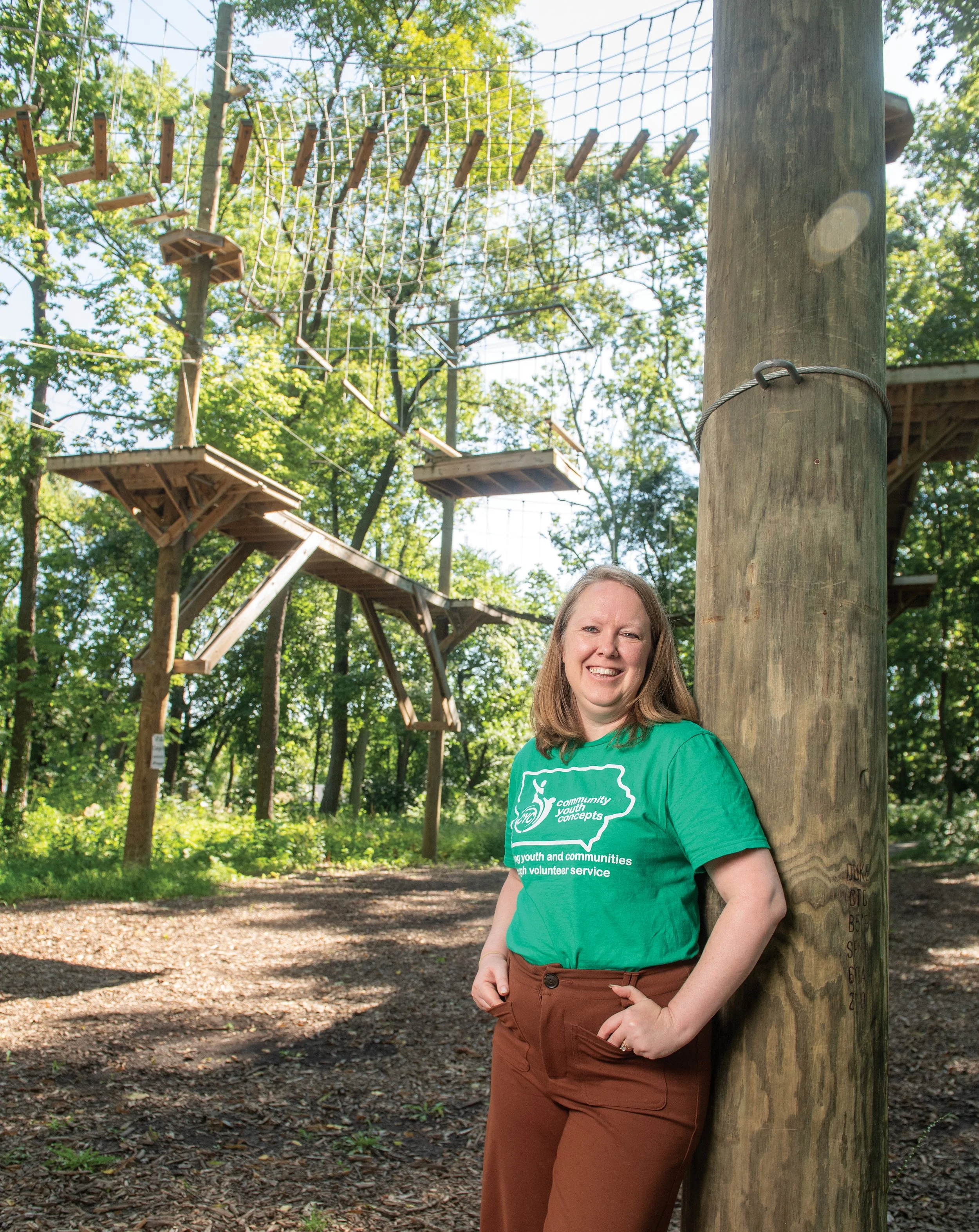
Alicia Vermeer. Photo by Duane Tinkey
But here’s the reality: In human services, the professionals are the program.
The program facilitator helping a young person navigate middle school. The case manager connecting a family to housing. The educator leading a classroom. The counselor guiding someone through a crisis. These aren’t administrative extras. They are the very people co-creating the outcomes our community cares about.
For years, nonprofits have operated under tremendous pressure to keep overhead as low as possible, minimizing spending on salaries, administration, technology and other operating costs. Thankfully, many philanthropic leaders are challenging that mindset, recognizing that meaningful impact, not artificially low overhead, is what truly matters.
We would never expect an engineering firm to deliver excellent work while underinvesting in engineers. We wouldn’t expect a law firm to thrive without investing in talented attorneys. Yet nonprofit organizations are often expected to solve some of our community’s most complex challenges while treating the professionals doing that work as an expense to minimize rather than an investment to strengthen.
One concept I’ve recently learned about is “vocational awe.” Originally used to describe helping professions, it refers to the belief that because work is meaningful, or even a calling, those who do it should be willing to sacrifice financially or personally.
It can convince people that exhaustion is simply part of the mission, that working one more evening, coming in on the weekend to catch up on paperwork, postponing a vacation is simply the price of making a difference. Over time, that mindset becomes unsustainable. Passion is an incredible fuel, but it is not an unlimited resource.
Most nonprofit professionals don’t enter this work expecting to become wealthy. They choose this field because they believe deeply in improving their communities. Their passion is one of our sector’s greatest strengths.
When we assume mission-driven professionals will simply “make it work,” we unintentionally create a system where talented people eventually leave for positions that offer better pay, stronger benefits or greater financial stability. The result isn’t just turnover. Organizations lose trusted relationships, institutional knowledge and years of experience that communities depend on. Recruiting and training replacements requires significant time and resources, slows momentum and ultimately weakens community impact.
If we truly want nonprofits to tackle our communities’ toughest challenges, we must invest in the professionals doing that work for the long term.
That doesn’t diminish the importance of volunteers. Volunteers are an extraordinary force for good, and nonprofits wouldn’t exist without them. They bring expertise, compassion, energy and community ownership that cannot be replaced.
But volunteers and professionals serve different purposes. Volunteers expand an organization’s reach and impact. Professional staff sustain it through consistency, accountability, specialized knowledge, regulatory compliance, evaluation, fundraising, financial stewardship and long-term planning.
The strongest organizations intentionally rely on both.
Fortunately, we’re seeing encouraging signs. More foundations are offering unrestricted operating support and recognizing that healthy organizations require a healthy infrastructure. National conversations have shifted away from judging nonprofits solely by their overhead ratios and toward understanding the full cost of creating meaningful, lasting impact.
Still, there is work to do.
As donors, funders, board members and community leaders, we should be asking, “Does this organization have the people, systems and stability needed to keep serving our community next year? Five years from now? Ten years from now?”
The answer depends on whether we are willing to invest in the people behind the mission. Fair wages, competitive benefits, professional development and healthy organizational infrastructure are not distractions from community impact. They are a prerequisite for it.
Every meaningful outcome we celebrate began because someone showed up to do the work.
Fortunately, our community is not lacking in passion, talent or commitment. Every day, nonprofit professionals across Central Iowa show up because they believe every child deserves opportunity, every family deserves support and every community deserves to thrive. They don’t do this work for recognition or financial reward. They do it because they believe in the possibility of something better.
To those who have chosen this path, thank you. Your work changes lives in ways that are often unseen but deeply felt.
Now it’s our turn as a community to invest in you.
Because when we invest in the professionals behind the mission, we ensure that this work, and the people called to do it, continue to deliver results for years to come. We’re investing in stronger families, stronger neighborhoods and a stronger region.
After all, the professionals are the program.
If you could wave a magic wand and make one wish for the future of the nonprofit sector, what would you wish for?
If I could wave a magic wand, I would create a future where cross-sector collaboration isn’t an “extra” — it’s an expected and fully supported part of how we solve community challenges. Nonprofits, businesses, government, schools and healthcare organizations each bring unique expertise, resources and perspectives. Lasting change happens when we bring those strengths together around a shared goal. Too often, collaboration depends on goodwill and volunteer time, making it difficult to sustain. I would wish for dedicated funding and capacity to support collaborative initiatives, allowing organizations to move beyond conversation and toward coordinated, long-term solutions that create greater impact than any one organization could achieve alone.