
Choosing radical kindness in philanthropy
by Christine Her, executive director, ArtForce Iowa
Christine Her is the daughter of Hmong refugee parents from Laos. She graduated from East High School and pursued her B.A. at Drake University studying creative writing, philosophy and political science. She currently serves as the executive director of ArtForce Iowa, a nonprofit with a mission to create opportunities for youths to transform through art. She is a cultural architect who is highly motivated to interrupt social and systemic injustices with hope and art while helping others rise in their own power and lean into their purpose.
________________________
ArtForce Iowa was conceived by a man who was convicted of attempted murder and terrorism for a drive-by shooting that happened in the summer of 1999 in Des Moines. While in prison, he hand-wrote three manuscripts: a memoir and two novels. After his release, he started taking a writing class at Des Moines Area Community College (DMACC) where he met an adjunct instructor of writing who was also a teaching artist. They met in person and debated adjectives. Their time spent together gave them both an opportunity to learn more about each other. After reviewing over 200 pages together, he asked the instructor: “Can you help me with something?” The student, a middle-aged man, reflected on his past and saw: a Black boy who was in and out of juvenile detention, profiled as dangerous and violent, a history of incarcerated family member and now an adult who served over 10 years in prison, but his dream of helping young people like him never disappeared.
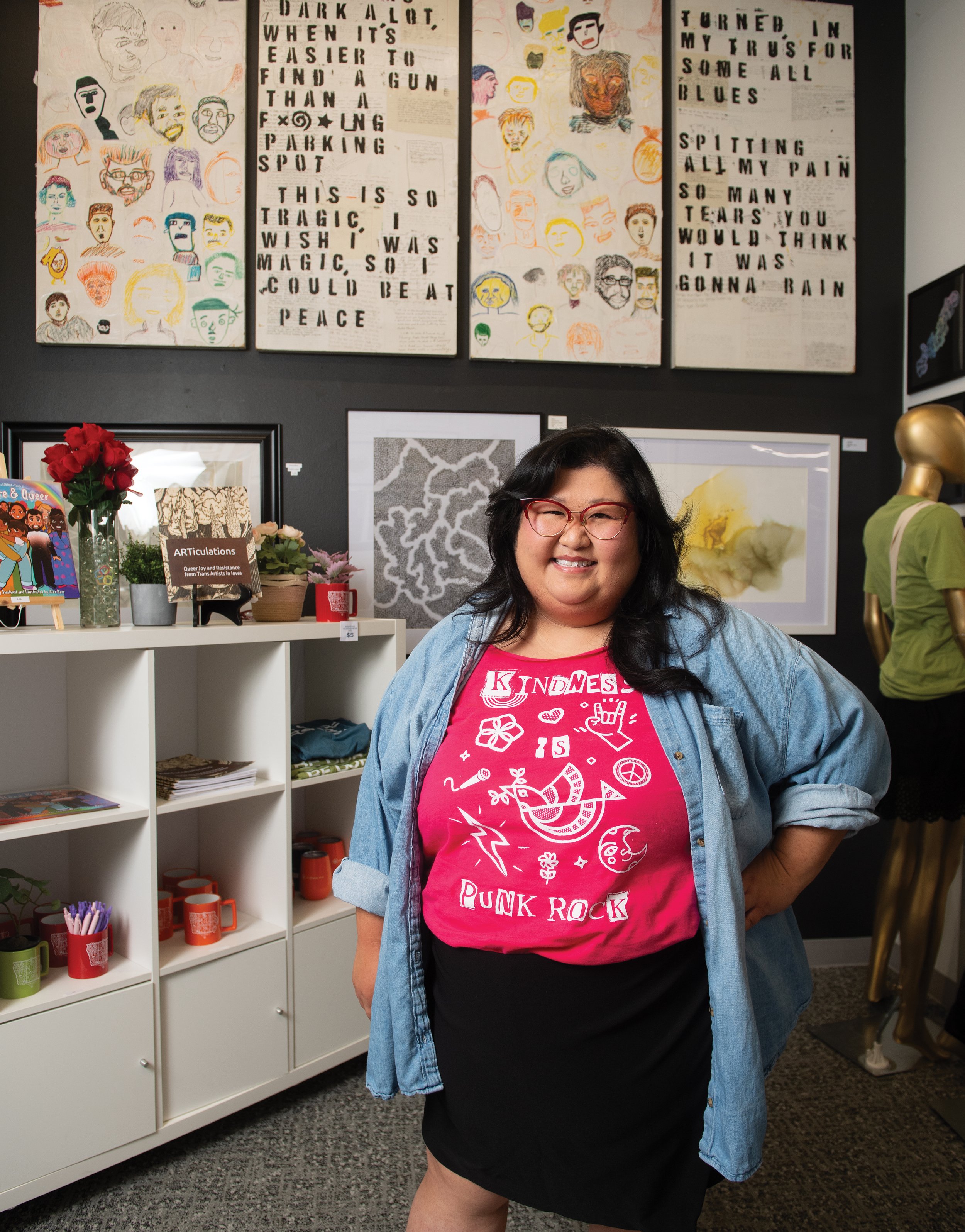
Christine Her. Photo by Duane Tinkey
Together, along with a group of concerned citizens, they took action. It was then that ArtForce Iowa was born in 2012. Our mission is to create opportunities for youths to transform through art. Our core work is youth-centered and provides a supportive arts community for children and youths who have involvement in juvenile court services systems (JCS), whether they are labeled delinquent, children in need of assistance (CINA) or living in custody of the Iowa Department of Human Services (in shelters, placement, or the foster care system), and for youths who identify as immigrants, refugees and first-generation Americans. Artist mentors and staff are trained in trauma-informed care and healing-centered engagement practices that involve an asset-based, culturally rooted approach to collective healing from trauma and well-being for young people and their adult allies. In weekly workshops, mentors create opportunities for art experimentation and learning in a multilingual atmosphere. Workshops are based on young people’s individual interests and encourage them to find their creative voice. It’s our hope for youth artists in our programs to feel safe, build resiliency and pursue higher education.
From the conception of ArtForce Iowa, the founder has asked to remain anonymous. He was worried funders wouldn’t support the organization because of his history as a convicted felon. It wasn’t until 2019 that we started telling the origin story of our organization, not because we had concerns, but because we didn’t know.
For over a decade, our organization has served thousands of young people in Central Iowa, sharing space, creating art and hosting annual art exhibits featuring the young people in our programs. In 2019, our theme was “origins.” While exploring this theme with our youth artists, our curiosity to understand the origin of ArtForce Iowa led us to this story of grief, loss, generational trauma, resilience and hope. Like our founder, we shared similar concerns because throughout the years, some funders have shared they didn’t want to financially support “young criminals.”
Even though we were worried about sharing our origin story, we knew that telling our story, while honoring the anonymity of our founder, was important because we believe interrupting cycles of trauma with art and kindness works. From witnessing young people learn how to regulate their feelings by painting or writing poetry to watching them learn how to apply financial literacy skills when selling their own art has been more than what we could imagine. All of this became reality because a convicted felon who started his own healing journey through his writing was brave enough to share his dream so other young kids like him could have an opportunity to change their lives and be their own agents in restoring their well-being. To us, our origin story is a point of pride that’s not only worth celebrating, but worth investing in.
Imagine with me.
What if philanthropy was rooted in radical kindness shifting from transactional investments to transformative investments rooted in equity, trust and belonging? Radical kindness in philanthropy actively addresses the root causes of systemic inequalities and challenges the power imbalances between donors and recipients. Radical kindness intentionally seeks to build authentic relationships and solidarity, promote social connection between different groups and communities with curiosity and without judgment, and is active.
The goal isn’t niceness.
Being nice avoids discomfort and is superficial. Niceness is being polite and well-liked. Kindness is active. Kindness is caring for another person’s well-being just because, not for the applause. Kindness works through the discomfort. Kindness is leading with integrity.
Some approaches to consider when choosing radical kindness in philanthropy:
Trust-based funding: Replace strict grant applications and restricted funding with unrestricted, multiyear support. This approach respects the autonomy and dignity of the funded communities to decide how to best use funds.
Decentralizing decision-making: Shift power by placing local leaders, grassroots organizers and community members with lived experience at the center of funding decisions. Lived experience is the key.
Systemic focus: Move beyond mitigating symptoms to actively funding advocacy, policy change and community organizing to dismantle broken structures. Band-Aids cannot heal wounds that need deeper attention.
Centering reciprocity: Eliminate the “savior” mentality by shifting from charity to solidarity. Recognize and acknowledge every individual has inherent strengths, agency and wisdom. Partnership based on mutual respect and shared accountability builds authentic community.
We have an opportunity to let kindness be our legacy and build an Iowa where everyone flourishes. The first step is saying yes to kindness.
If you could wave a magic wand and make one wish for the future of the nonprofit sector, what would you wish for?
My one wish is what some would call radical, but nonprofits wouldn’t exist the way they do now because the needs of our communities are met.