
Generosity is essential, but collaboration is the path forward
by Mary Sellers, president, United Way of Central Iowa
Mary Sellers was named president of United Way of Central Iowa in July 2021, returning to a role she previously held from 2012 to 2017. In the interim, she served as U.S. president of United Way Worldwide, where she led a network of 1,200 local United Ways. Earlier, she spent 10 years as president and CEO of the Science Center of Iowa, leading the development and operation of its downtown Des Moines facility. She earned a bachelor’s degree from the University of Florida and an MBA from the University of Iowa’s Tippie School of Management.
________________________
One of the biggest trends shaping nonprofit leadership today is the changing relationship between philanthropy and public investment coupled with an increasing demand for services. Nonprofits have always relied on a mix of funding sources to meet community needs. Public funding often provides the scale and consistency needed to deliver essential services. Philanthropy helps organizations innovate, respond quickly, build partnerships and meet needs that do not fit neatly within government funding streams.
That blend is shifting.
At United Way of Central Iowa, we recently surveyed health and human service organizations through our 2026 Thriving Community Survey to better understand what nonprofits are experiencing right now. The results show a sector that is deeply committed and increasingly stretched.
Eighty-five percent of organizations surveyed receive some form of public funding. Nearly half reported a decrease in at least one public funding stream over the past year. At the same time, community need continues to rise. Eighty-five percent of respondents expect demand for services to increase in the coming year, yet only 30% believe they will be able to fully meet that demand.
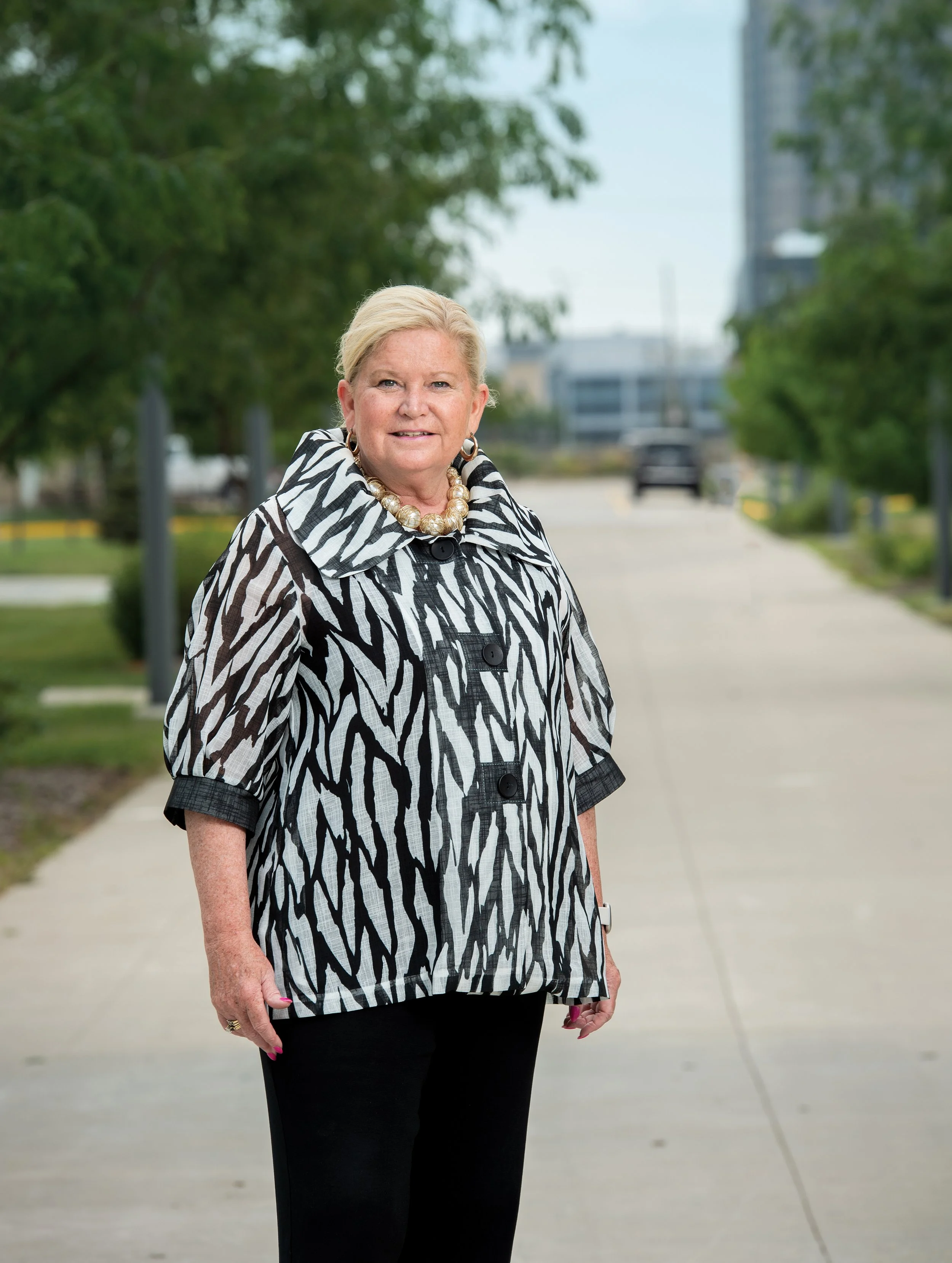
Mary Sellers. Photo by Duane Tinkey
Those findings point to a growing gap between what people in our community need and what nonprofits have the capacity and resources to provide. That gap affects whether families can access food, housing support, childcare, mental health services, transportation, youth programs and other critical supports. It also affects whether nonprofits can retain staff, maintain service hours or reduce waiting lists.
Naturally, many people ask whether philanthropy can make up the difference when public funding declines. The honest answer is: Philanthropy can help, but it cannot fully replace public investment.
That can be a difficult message to share in a community like ours, because Central Iowa is extraordinarily generous. Des Moines has a long history of engaging and supporting nonprofits, and we see that every year at United Way. Thanks to individual donors and businesses across our community, United Way of Central Iowa ranks No. 1 in the nation for per capita giving among United Ways that raise more than $18 million.
That is a source of real pride for our community. It says a great deal about how seriously people here take their responsibility to one another. It also reminds us of the importance of philanthropy. Donors, businesses and foundations provide flexible resources that allow nonprofits to respond to urgent needs, try new approaches, invest in promising strategies and work together in ways that are difficult through restricted funding sources.
But even in a generous community, philanthropy was not designed to carry the full cost of essential community services at scale.
Public funding and philanthropic investment play different roles. Public funding often supports the infrastructure needed to serve large numbers of people over time. Philanthropy provides flexibility to strengthen that infrastructure, fill gaps and spark innovation. When philanthropy is expected to replace public funding at scale, nonprofits and the people they serve are placed in an unsustainable position.
Our survey data make that clear. More than half of responding organizations expressed concern about their financial stability. Nearly three-quarters reported having six months or less of operating reserves. These organizations are not sitting on excess capacity. They are already making difficult decisions about programs, staffing and service levels while preparing for greater demand.
That is why the conversation about philanthropy cannot focus only on generosity. It also has to focus on collective action.
The most effective philanthropic investments recognize the complexity of nonprofit work. That includes support for direct services, but also investments in organizational capacity, technology, data, workforce development, evaluation, advocacy and collaboration. It typically includes flexible funding models that help organizations plan, retain talent, respond in real time and sustain progress.
Some of our community’s most meaningful progress has happened when philanthropy, business, government, nonprofits and residents have come together around a shared understanding of the issue. Whether we are addressing housing instability, food insecurity, childcare access, workforce barriers or behavioral health needs, no single organization or funding source can meet the challenge alone.
At United Way of Central Iowa, we see our role not just as a convener, but also as a strategic partner and mobilizer. We use data to identify community needs, align resources around shared priorities and bring organizations together to pursue progress that no one entity could accomplish independently.
For business leaders, this is especially important. The health of the nonprofit sector is not separate from the health of the broader community. When families cannot access childcare, housing is unstable, or food insecurity and mental health challenges increase, the effects ripple across schools, workplaces, health systems and neighborhoods.
Investing in nonprofits is not simply charitable. It is an investment in the conditions that allow communities and businesses to thrive.
The path forward requires shared responsibility. Public investment, philanthropy, business leadership, nonprofit expertise and community voice all matter. Each brings something different. Each is necessary.
The nonprofit sector is resilient, but resilience should not be mistaken for unlimited capacity. Nonprofit leaders and staff continue to adapt with creativity and determination. In Central Iowa, we are fortunate to live in a place that understands the value of that work. Our challenge now is to turn that generosity into sustained, strategic partnership.
Philanthropy matters more than ever. But its highest purpose is not to replace public investment. It is to help build a stronger, more responsive, more connected community infrastructure. Our opportunity now is to match the generosity of this community with the partnership and investment needed to help every person thrive.
If you could wave a magic wand and make one wish for the future of the nonprofit sector, what would you wish for?
If I could make one wish for the future of the nonprofit sector, it would be for every sector to recognize its shared responsibility in building a thriving community. In Central Iowa, that work has already begun through a strong foundation of cooperation and collaboration among nonprofits, government, business, philanthropy and residents. My wish is that we continue to build on that foundation with sustained investment, shared goals and a deeper understanding of what each sector can contribute. When we align our strengths and support the long-term sustainability of nonprofits, we create the conditions for our whole community to thrive.