
The arts belong at the center of community investment
by Monica Holt, president and CEO, Des Moines Performing Arts
Monica Holt is president and CEO of Des Moines Performing Arts and an Emmy Award-winning arts executive with a track record of leading high-impact initiatives at the intersection of creativity, strategy and community. Before joining DMPA in 2026, she held several senior leadership roles at the John F. Kennedy Center for the Performing Arts, most recently serving as senior vice president of artistic planning. Throughout her career, she has focused on making arts institutions feel relevant to the communities around them, expanding who feels invited in and how audiences experience their work. She also hosts Arts Unscripted, a podcast featuring conversations with leaders across the arts and culture sector.
________________________
One of the most significant shifts in philanthropy today is the move from funding programs in isolation to investing in collective impact. But as cities, corporations and foundations increasingly seek solutions that advance economic vitality, workforce development and community well-being, the arts are often still separated into optional funding categories competing for what’s left in the budget. Now is the moment to uplift arts organizations as essential problem-solving partners across sectors as we advance our shared goals for the future, together.
Arts organizations are already contributing to stronger economies, more connected communities and better education outcomes, including at Des Moines Performing Arts, where I serve as president and CEO. Des Moines Performing Arts has spent years building programming, education initiatives and community partnerships that do real work well past the final curtain: moving money through downtown, fostering skills employers are short on and creating public access to the arts for people who might not otherwise walk through our doors. That impact isn’t new, but funders increasingly have the language and a framework to recognize that value.
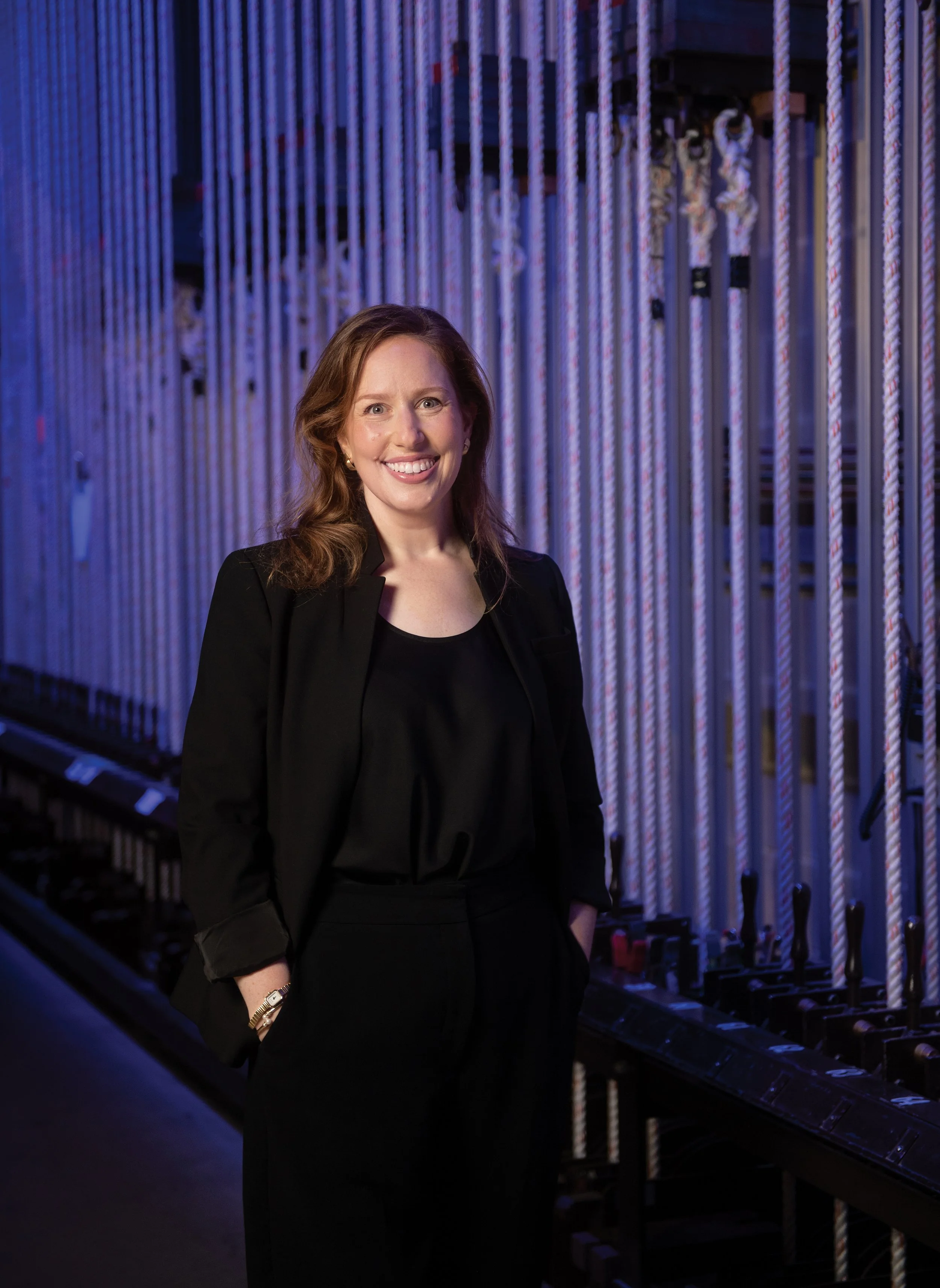
Monica Holt. Photo by Duane Tinkey
Bloomberg Philanthropies is one of the country’s largest arts funders, and one of its signature programs, the Asphalt Art Initiative, funds public art on city streets specifically because of what it does beyond the art itself. A 2022 safety study of the initiative’s street art projects found crashes involving pedestrians and cyclists dropped by half, and the rate of drivers yielding to pedestrians rose by more than a quarter. The grant is for art. The metric that justifies it is public safety. Locally, Bravo Greater Des Moines pools a share of hotel/motel tax revenue from local governments to fund nearly 90 nonprofit arts, culture and heritage organizations with the shared goal of a more vibrant, more visited, more livable region.
Des Moines Performing Arts’ Willis Broadway Series alone generates roughly $50 million a year in economic activity: dinners before curtain, hotel rooms for touring audiences, a parking garage full on a Tuesday night that would otherwise sit empty. Statewide, Iowa’s creative sector contributes more than $4 billion to the economy and supports tens of thousands of jobs. Economic development offices already treat this as a return worth planning around. The question is whether civic investment strategies are keeping pace with institutions already producing that return, and how we can invite arts and culture into the conversation beyond a cultural affairs line item.
Then there’s talent, which is a conversation every employer in this state is already having. The World Economic Forum’s most recent Future of Jobs report ranks creative thinking among the top five skills employers say they need most and expect to need even more of by 2030. Arts education is custom built to be helpful in growing that exact skill. Des Moines Performing Arts’ Applause Series has brought live theater to Iowa students since 1996; this fall we’ll welcome our 1 millionth student through the program. Being invited into a theater at a young age asks students to witness confidence onstage, understand collaboration backstage and develop patience to sit with 1,500 peers and follow a story to its end. Through the Iowa High School Musical Theater Awards and Des Moines Performing Arts’ summer camps, students actively create, perform, problem-solve and lead alongside their peers, developing the communication, teamwork, adaptability and creative thinking skills employers increasingly value. These programs, and others like them at arts organizations across the region, hold decades of experience building the skills employers say they can’t find enough of. Few companies could replicate that pipeline on their own, and none would especially want to try. Businesses serious about their talent pipeline can be planning alongside arts organizations, cultivating shared pathways for the skills and innovation that will shape our future.
Foundations already fund social connection, well-being and educational growth as goals in their own right. Arts organizations contribute directly to each of these goals, often through programs that are already embedded in communities and operating at scale — these are the “arts for non-arts outcomes” we talk about when sharing about the overall impact of a thriving cultural scene. For Des Moines Performing Arts, this can be delivered by specific programs: $10 tickets through Access Broadway, free tickets for veterans and military families through Vet Tix, and pre-K arts programming now running at 16 sites across the city. It also shows up when two strangers, with nothing in common but the row they’re sitting in, sit down next to each other and have a shared experience. Those strangers, and everyone in the theater, leave as a community, regardless of whether they felt part of one when the lights first dimmed and the show began.
A thriving community and vibrant cities are deliberately built by the people who invest early. Too often, arts and culture are considered after priorities have been set, rather than being invited to help shape solutions from the start. When cities, businesses and foundations uplift the role the arts can play in addressing community challenges, they unlock partners uniquely positioned to bring people together, generate economic growth and develop our next generation of leaders.
If you could wave a magic wand and make one wish for the future of the nonprofit sector, what would you wish for?
I wish for a future where every city, business and foundation opens by asking what partnerships could solve the challenge at hand, not just who needs funding. Cross-sector collaboration should start earlier, with every asset — including arts and culture — fully at the table.