
Saving lives is a supply and demand issue
by Stacy Sime, president and CEO, LifeServe Blood Center
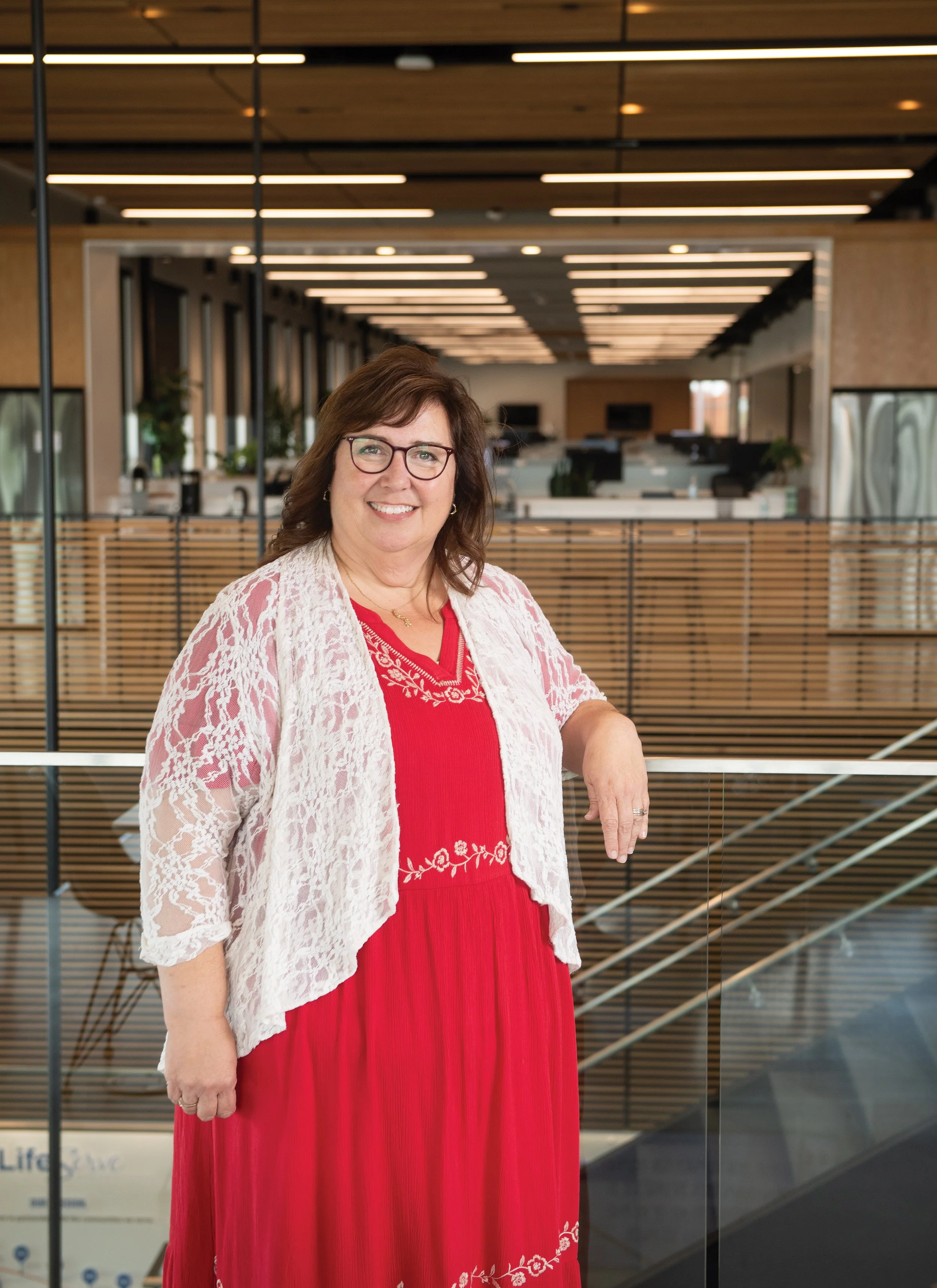
Stacy Sime. Photo by Duane Tinkey
Stacy Sime is the president and CEO of LifeServe Blood Center. Stacy’s career in transfusion medicine started at Mercy Medical Center in Des Moines, where she worked in an active transfusion service for six years. Her blood center experience has touched nearly all facets of the organization, from quality to donor services to recruitment to lab work. She sits on the board for the National Blood Collaborative, and has served as the chair of Blood Centers of America.
________________________
Every 2 seconds, someone in America needs blood. One in seven people entering a hospital needs blood. One blood donation impacts up to three lives. Blood and platelets come from human donors only, and cannot be manufactured in a lab. And only 3% of adults donate blood annually.
In a discussion of philanthropic challenges LifeServe Blood Center faces now and will continue to face into the future, we must begin with these indisputable realities.
For us and other blood centers across the country like us, saving lives is a supply and demand issue.
Our mission is simple but significant: We save lives in partnership with the communities we serve. Our top priority and the duty that drives us 24/7 is ensuring our partner hospitals have access to a consistent, safe, blood supply to save the lives of cancer patients, car accident victims, premature newborns and untold others.
LifeServe is one of the 15 largest blood centers in America, supplying blood to more than 175 hospitals across Iowa, South Dakota, Nebraska and Illinois. Blood donations we collect go directly to local patients, so if you give blood at a LifeServe blood drive or donor center, you know that your gift may save the life of a family member, friend of a friend, coworker or neighbor.
Now, let’s talk about that supply and demand issue.
Like many nonprofits and philanthropic organizations, the COVID-19 pandemic reset how we operate. Prior to 2020, we collected nearly 70% of our blood in a mobile blood drive environment, out in the community. The other 30% was collected at the handful of brick-and-mortar donor centers sprinkled throughout our service region.
We drove our bloodmobile buses and box trucks full of equipment to community events, local businesses, large corporations, high schools and colleges and collected blood on the spot.
Many of the people who gave blood at these drives were young, first-time donors and the simple, positive experience they had donating blood and saving lives convinced them to come back to donate with us long into the future.
Then came the pandemic.
When schools and businesses closed or shifted to remote operations, the effects on our collection were immediate. Of course we kept hosting mobile drives in our communities, but during the pandemic and still today, many of our business, high school and college blood drives have not returned to nearly the same level – if at all.
As Des Moines businesses and their employees have stayed in a remote or hybrid environment five years later and fewer people are working en masse together, gone are the large, frequent blood drives onsite at packed office buildings that contributed so much lifesaving blood to local hospitals.
Companies offered PTO and VTO to employees to incentivize blood donations onsite because they knew how important it was to be good community partners helping make a difference. The decline in those types of high-volume drives was precipitous, profound and, unfortunately, sustained.
I and other LifeServe leaders recognized this supply issue immediately. We had to adapt our strategy, and fast, since lives were potentially at stake. So rather than rely so heavily on blood donations from drives near where people work, we tried to give people easy ways to donate near where they lived (and now worked from home).
We opened new donor centers in places like Ankeny, West Des Moines, Pella, several cities in South Dakota, and a new state-of-the-art LifeServe headquarters in Johnston last year. More are on the way.
This strategy has been successful. Due to the innovative and lifesaving work of LifeServe staff and our generous community of blood donors, we have learned how to shift blood collection to ensure we still have the right blood products for the right patients at the right time and to meet the demand from our local hospital partners across our four-state area. But it has resulted in a massive shift in how and where our donations come from.
In 2024, 51% of our blood donations came from mobile drives in our communities – a substantial drop from the 70% in 2019. Last year we collected more than 143,000 blood products in total, impacting more than 285,000 lives. But the age of our donors is trending up, and first-time donations are trending down.
In times of crisis, an organization’s leaders must step up and shine. Lack of action for LifeServe could have been disastrous, with the trickle-down effects potentially even disrupting local blood supplies.
As we settle into yet another new normal post-COVID, where all across America blood donations are down, we now recognize the next great need in our strategy: community collaboration and new partnerships.
Collaboration is the cornerstone to our lifesaving mission. We can’t succeed without our incredible staff, our hospital partners, our dedicated volunteer chairpeople in the communities who recruit donors, and our community and business partners who recognize the importance of a sustained blood supply and host drives for their employees and stakeholders.
Many of us will need blood at one point in our life. These moments are unplanned and urgent. So ask yourself: Are you, your business, or your organization thinking about collaborations and partnerships with organizations like ours that can save local lives (maybe even yours) or contributing to the health and well-being of the community you invest so much in? If not, there is never going to be a better time to start.
If you could wave a magic wand and make one wish for the future of the nonprofit sector, what would you wish for?
This answer will not be unique, as this is a challenge for nearly every nonprofit, community organization and business: finding that secret sauce to engage youths. The future of our organization and the nonprofit sector relies on engaged, motivated generations continuing our mission. The younger generations want to make a difference in their communities; they just need to be activated. In a digital world where the content they see is so curated by algorithms and behavior, how do you break through the noise and tell your story in a way that 1) reaches them, and 2) inspires them to get involved.