
Nothing grows alone
by Whitney Bouma, executive director, In Harmony Farm
Whitney Bouma is the executive director of In Harmony Farm and brings more than a decade of nonprofit leadership experience. Before joining In Harmony Farm, she served as chief program officer at the Greater Des Moines Botanical Garden. She holds a Master of Science in ecology and biodiversity from Victoria University of Wellington, New Zealand, and a Bachelor of Science in biology and horticulture from Iowa State University. She is passionate about strengthening community connections and building organizations that create lasting impact.
________________________
Healthy prairies have quiet wisdom. To many, they may appear to simply be a collection of plants growing in a field. But above and below the surface lies an intricate network of relationships that makes that prairie possible. Soil, roots, pollinators and microorganisms each play a distinct role. No single part creates the whole and it is the connections among them, seen or unseen, that allow that system to thrive.
Before I found my career in nonprofit leadership, I studied plants and the ecological systems that support them. So, it is not surprising that the botanist in me has me returning to this lesson often. Healthy systems are not defined by the strength of a single part, but by the strength of the relationships among many.
Nearly two months into leading In Harmony Farm, I have spent more time listening than speaking. From conversations with staff, farmers and board members to hours spent reading board minutes, financial reports or grant proposals, each conversation and each piece of written record has helped me learn its story.
Whether the conversation is with a farmer planning for the next growing season or a board member thinking about the future of the organization, there is a common theme, and the underlying questions are the same.
How do we build something that will last? How do we plan for what we can’t predict? How do we continue moving forward when so much around us is changing?
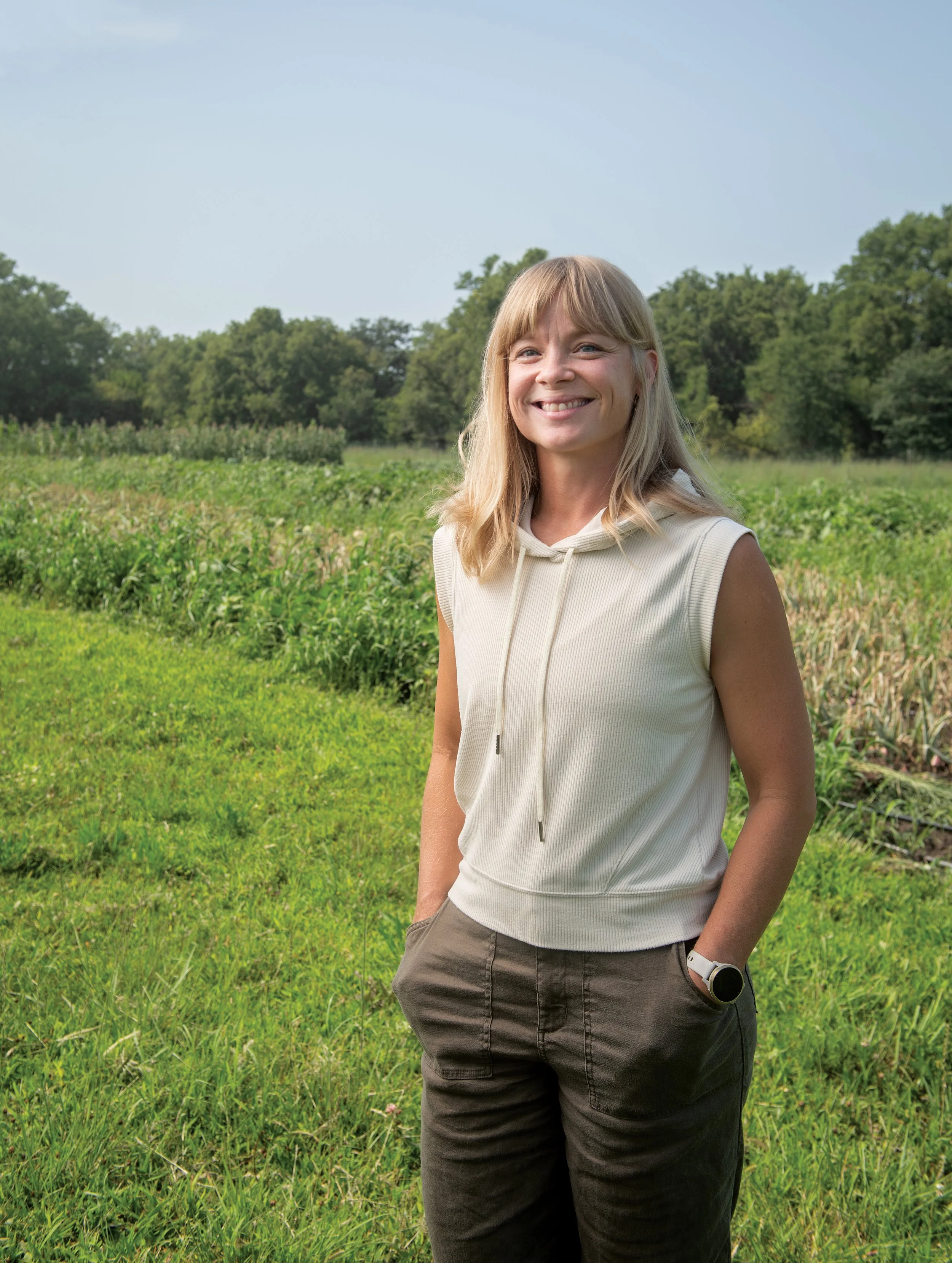
Whitney Bouma. Photo by Duane Tinkey
Periods of uncertainty don’t just test organizations. They reveal how they were built.
My first months at In Harmony Farm have convinced me that these moments of uncertainty don’t need to change our mission, but they will clarify how we pursue it.
Like many nonprofit leaders, I have felt the pressure of an often-unpredictable landscape. When the ground shifts beneath us, our instinct is to focus on what feels most immediate. Sometimes that is to hurry and write the next grant, find a new donor or seek the next partnership. I am in no way making the case that those things shouldn’t happen, because they are an essential part of our work.
Yet the more time I spend listening and learning, the more I find myself seeking stability in a different direction and asking myself: What makes an organization resilient long before the next disruption arrives?
For me, the answer begins with community.
Not one community, but many, made up of people connected by a shared purpose. Each brings different strengths, responsibilities and perspectives, but together they create something larger than themselves.
At In Harmony Farm, our work begins with emerging farmers. Today, nine farm businesses are growing on In Harmony Farm land, but their success depends on much more than access to acreage. It depends on the ecosystem we are intentionally cultivating, creating those connections to land, education, markets, resources and partnerships, all rooted in regenerative farming practices. Each of those layers helps create the conditions where farmers, families and communities thrive.
Since 2022, we have supported farmers in the production of more than 150,000 pounds of fresh fruits and vegetables while fostering connections between farmers with families across Central Iowa through fresh, locally grown food. Our farmers are building businesses that allow them to continue doing what they care most about — feeding their communities. From the farmers who grow the food to the families who gather around their tables because of it, that harvest reflects the work of an entire community.
For those of us in philanthropy, we have an opportunity to think beyond individual transactions and toward deeper-rooted partnerships. Individual gifts and grants matter, but the strongest organizations are rarely built by a single contribution. They are built over time through trust in a shared purpose, a willingness to invest in people and a commitment to strengthening organizational capacity year after year. In doing so, we strengthen not only individual organizations, but the communities they exist to serve.
I suspect the unpredictable landscape might not stabilize anytime soon. But if these first months at In Harmony Farm have reinforced anything, it is that the way we respond to uncertainty is a choice. We can focus only on the next need, or we can also invest in the relationships and partnerships that strengthen our organizations and our communities over time.
The future of our communities won’t be shaped by a single gift, grant or even a single organization. It will be shaped by what we choose to build together.
Nothing grows alone.
If you could wave a magic wand and make one wish for the future of the nonprofit sector, what would you wish for?
If I could wave a magic wand, I would redefine what it means to invest in nonprofits. Funding is often directed toward projects or tangible needs, with limited flexibility to invest in the people and organizational capacity that make those projects possible. Strong organizations require talented people, healthy operations and the capacity to adapt as needs change. While this kind of support may be less visible than a new program or capital project, it is the foundation that creates lasting impact. By investing in strong organizations, we strengthen not only nonprofits, but also every community they serve.